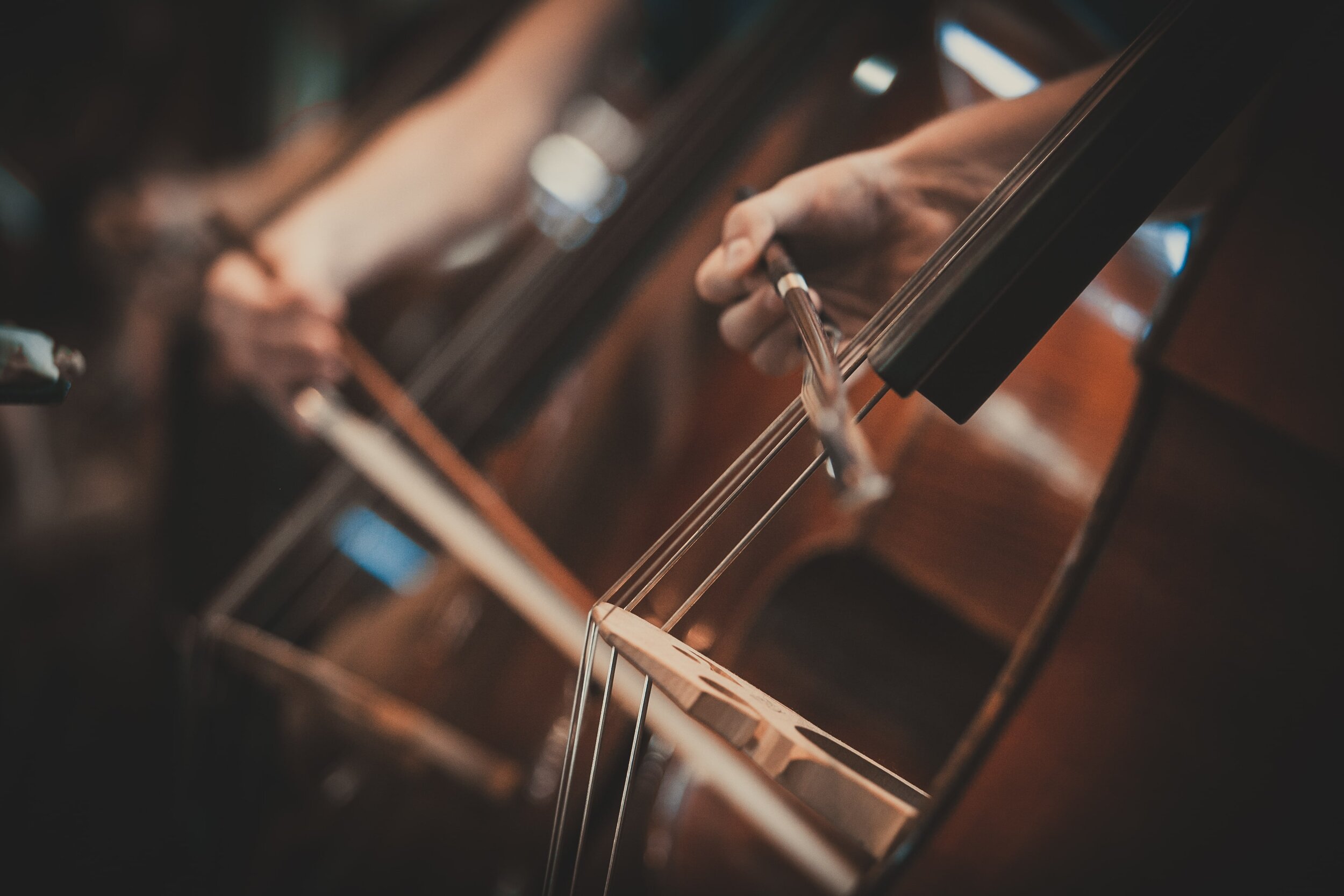
Explore our collection of contrabass-related research. Discover insights from researchers with the Analysis, Creation, and Teaching of Orchestration Project, along with recommended external resources.
In following contrabass-related pages, from the textbook Extreme Orchestration, you will find sections on Bowed Strings, delving into the fundamentals of bowed string instruments, covering both left and right-hand techniques. This exploration extends to alternative timbres for the contrabass, offering insight into its versatile expressive capacities.
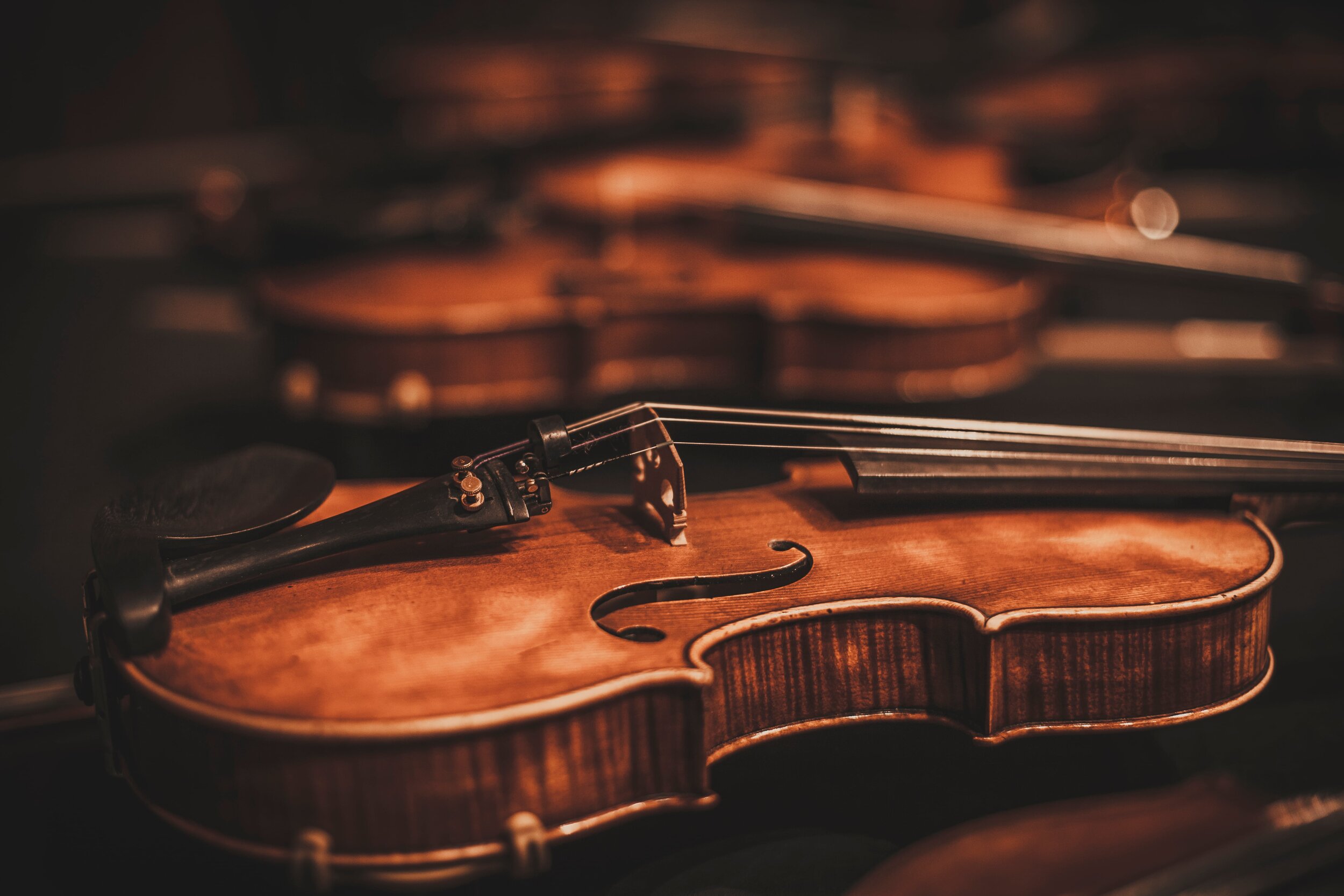
The bowed string family of the modern symphony orchestra consists of only four instruments: violin, viola, cello, and bass. More music has been written to feature these instruments than any other family of the orchestra (woodwinds, brass, or percussion). A full string section forms the backbone of most orchestral literature.
On string instruments, it is possible to change the pitch of a string by stopping the string with the left hand. In other words, the left hand applies pressure to a string against the fingerboard, in essence shortening its length. Shorter strings produce higher pitches, so as notes are stopped higher on the fingerboard, the pitch rises.
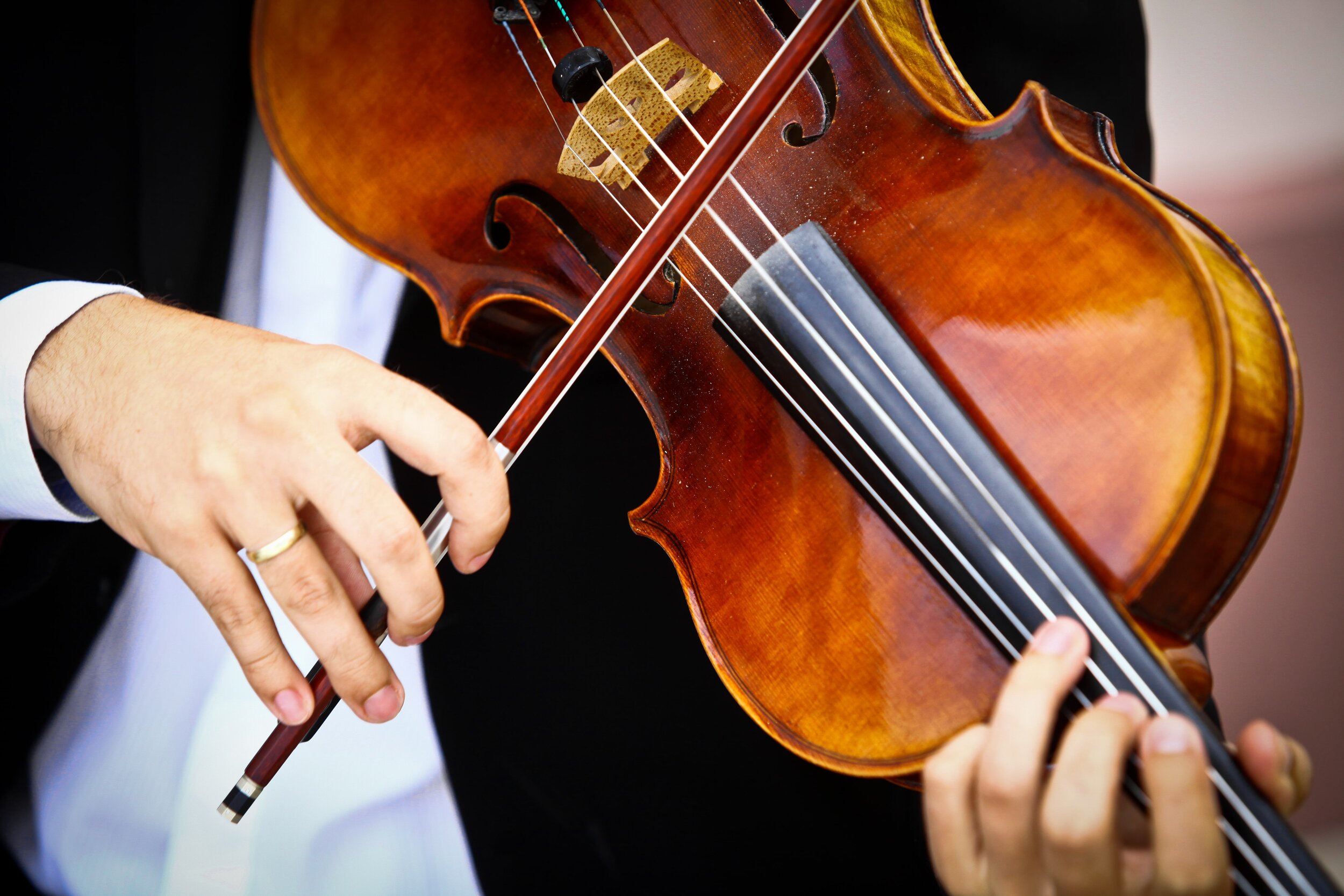
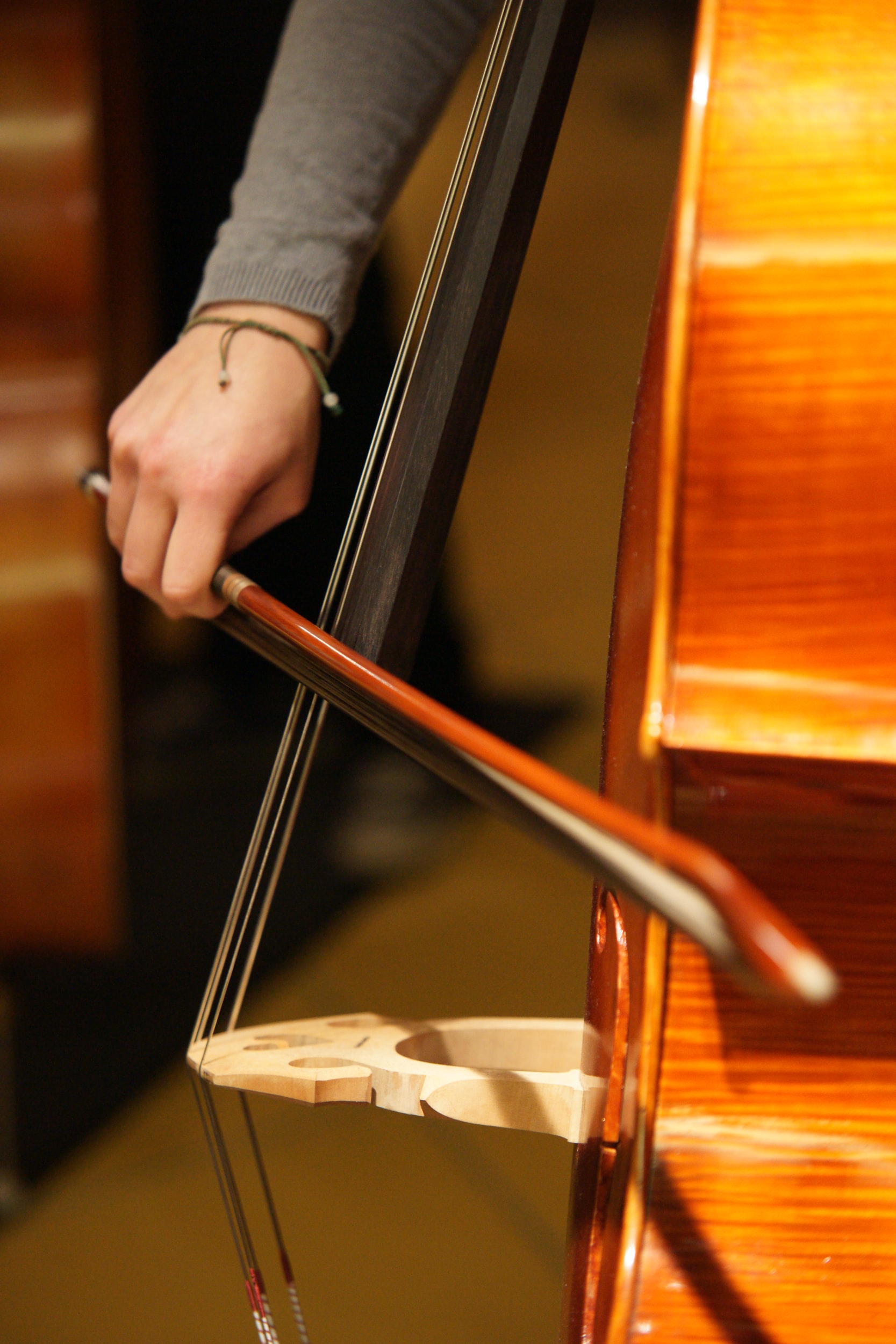
The most common way to produce a sound on orchestral string instruments is by drawing a bow across one or more of its strings. This technique is called arco. Because playing with a bow is the default method of playing these instruments, it is not necessary to write the term arco on the score unless canceling out an alternative way of playing, such as plucking or striking the strings.
It is possible to achieve a greater variety of timbres with the bowed strings than with any other orchestral instrument. Through the use of harmonics, mutes, varied bow placement, plucking or striking the strings, and other extended techniques, a large selection of sound possibilities becomes available.
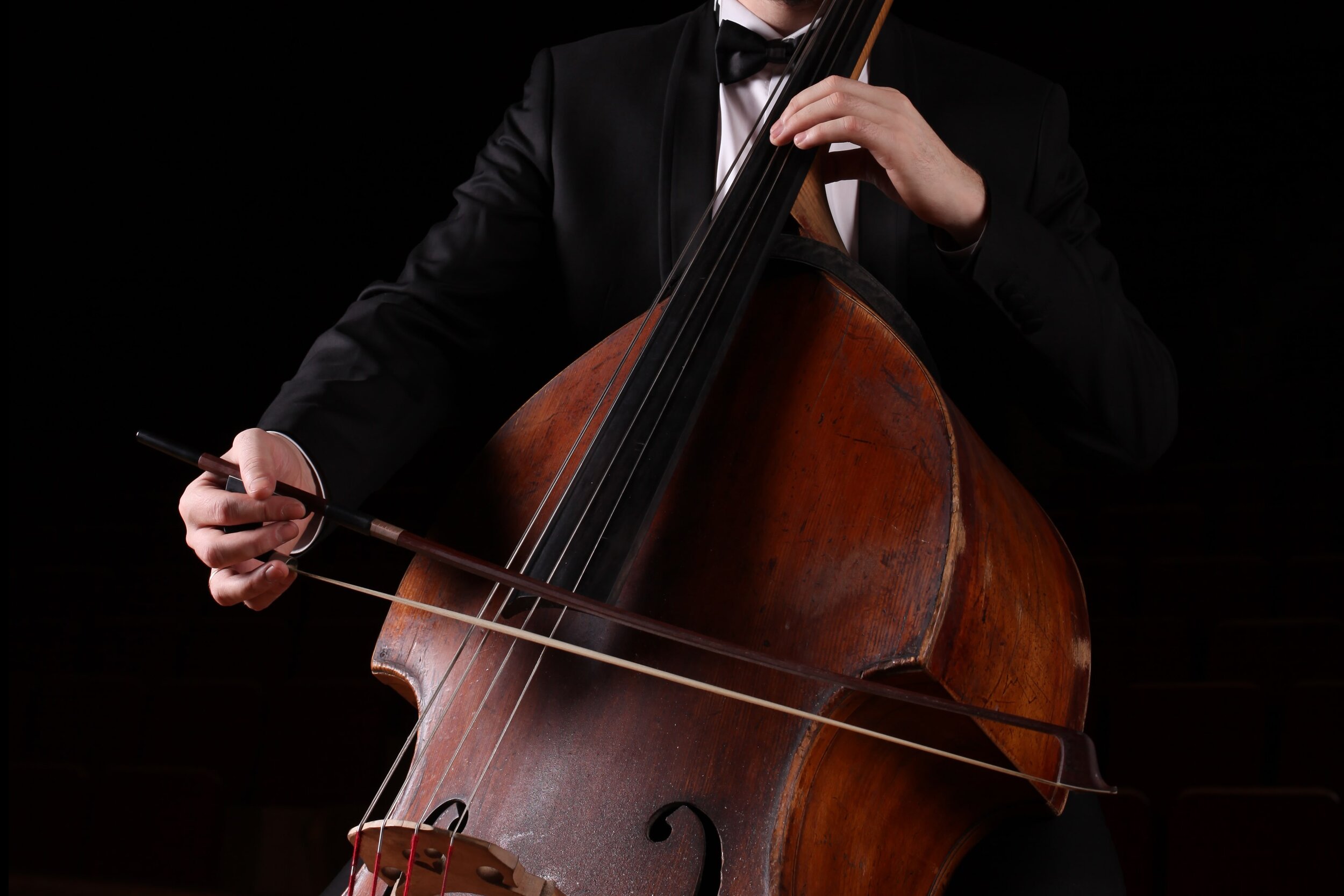
The contrabass is the largest and the lowest of the bowed strings. Also known as double bass, bass viol, string bass, or simply bass it is positioned in front of the player, resting on an endpin, as the performer stands or sits on a high stool. Most of the techniques for violin, viola, and cello are possible on bass as well, and this instruments blends well with the other strings.
On these pages, you'll find a selection of repertoire that highlights the contrabass’s timbre, techniques, and versatility.
Repertoire examples for Contrabass, based on recommendations from orchestration treatises and college syllabi.
This blog and video explores the incredible versatility of the contrabass, focusing on techniques with the tip of the bow.
My goal with sharing some of these techniques is to open your mind to a curiosity of my instrument. By scratching the surface, I hope that you will scratch your head and think past whatever sounds you hear.
Quick Links — Resources
This section connects you with key resources from our research partners, offering detailed insights into contrabass techniques and performance. Instrument Studies for Eyes and Ears from the Jacobs School of Music presents a series of video excerpts demonstrating core techniques. Additionally, The Orchestra Up Close by the Orchestre Métropolitain explores the contrabass’s role within the orchestra, featuring visualizations of its construction and relevant repertoire recordings.
“The double bass, or just bass for short, is the lowest instrument in the string family. Like the cello, the instrument is fixed to the ground with an endpin.”
Repertoire examples for String Ensemble, based on recommendations from orchestration treatises and college syllabi.